Digital Practice Tools Revolutionize Blackjack Tournament Preparation on Multiple Devices
Viktor Beck · Nov 15, 2026

Digital Practice Tools Revolutionize Blackjack Tournament Preparation on Multiple Devices
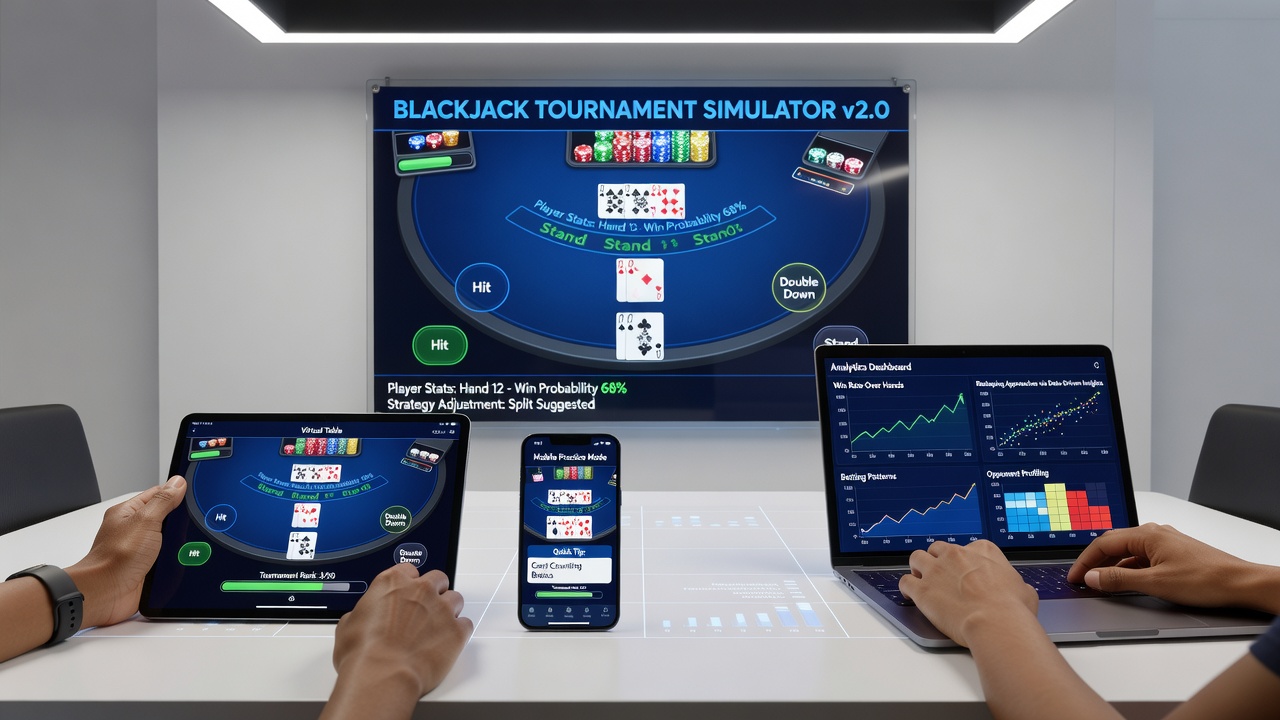
Practice platforms have become central to how competitors prepare for blackjack tournaments, allowing seamless transitions between smartphones, tablets, and desktop computers while replicating real tournament conditions with increasing accuracy, and data from industry reports shows rising adoption rates across multiple regions since early 2025.
Platform Features That Mirror Tournament Dynamics
These systems integrate variable blind structures, timed rounds, and chip management tools that reflect actual event formats, so users can run full simulations without leaving their chosen device, while synchronization features ensure progress carries over when someone switches from a phone session during a commute to a desktop setup at home, and this flexibility has encouraged more structured daily practice routines among regular participants.
Developers have added modules that track decision speed and risk tolerance under pressure, features that align with observations from tournament directors who note players arriving with better familiarity of multi-table formats, and in November 2026 several platforms reported updates that incorporated new payout structures drawn from recent North American events to keep training materials current.
Cross-Device Usage Patterns Among Competitors
Research compiled by gaming associations indicates that a growing share of tournament entrants now log practice hours on at least two different devices each week, with mobile sessions often used for quick strategy drills and larger screens reserved for reviewing hand histories in detail, and this pattern appears across markets tracked by regulators in Canada and Australia where online tournament participation continues to expand.
One study from a European research institution found that players who maintained consistent cross-device routines showed measurable improvements in final table frequency compared with those relying on single-device access, although the report emphasized correlation rather than direct causation and highlighted the need for further longitudinal data.
Adjustments in Strategic Decision Making
Access to repeatable simulations has shifted emphasis toward earlier aggression in certain stack sizes and more precise tracking of average opponent tendencies, elements that become easier to internalize when users can pause, review, and restart specific scenarios across devices without losing context, and tournament analysts have documented these trends through post-event surveys conducted at major venues.
Platforms also provide side-by-side comparisons of different rule variations, enabling competitors to adjust quickly when moving between events governed by distinct jurisdictional standards, and figures released by state gaming boards in the United States show corresponding increases in multi-state tournament entries as preparation tools reduce the learning curve associated with rule differences.
Integration With Live Event Schedules
Several major operators now link their practice environments directly to upcoming tournament calendars, so participants receive notifications about rule changes or new payout structures well in advance, and this connection has streamlined registration processes while giving users time to rehearse under the exact conditions they will encounter, according to updates shared by industry trade groups.
Observers note that November 2026 schedules included expanded satellite events feeding into larger main tournaments, a development that coincided with platform enhancements allowing users to practice satellite-specific stack management on any device they prefer.
Conclusion
Practice platforms continue to influence how competitors approach blackjack tournaments by providing consistent, device-flexible training environments that replicate real conditions, and ongoing updates from developers and regulatory bodies suggest these tools will remain integral as participation grows across additional markets.